Morning light can make or break a room. A west-facing living room that glows at four in the afternoon may feel like a greenhouse by five, while a north-facing bedroom can look gray even on a bright day. Curtains are the simplest tool for editing that light, and the choice between sheer and semi-sheer is usually the decision that matters most. Both soften the view. Both let daylight through. The difference is in how much they blur, how much glare they cut, and how private the room feels after dark.
What Sheer and Semi-Sheer Really Mean
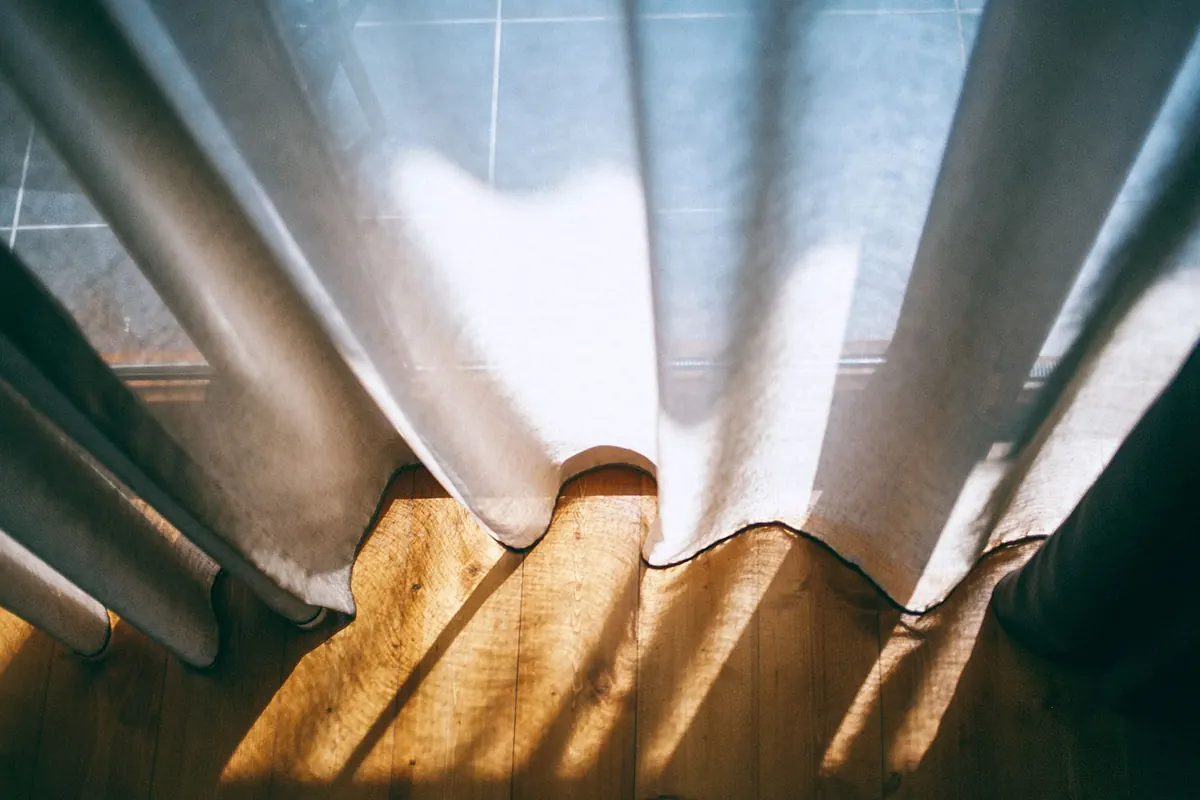
Manufacturers use the terms loosely, so start with the fabric in your hand rather than the label on the sample. A true sheer—voile, gauze, fine linen—has an open weave you can see through. Held against a window, it turns trees and rooftops into a soft wash of color. It lets most daylight into the room, diffuses hard edges, and keeps the window from looking like a black rectangle at night. Semi-sheer is denser. You can still see light through it, but shapes outside become vague rather than detailed. It has more body, hangs with a heavier fold, and reads more clearly as a color on the wall. Neither is automatically better. A sheer is a filter; a semi-sheer is a soft barrier.
The quick hand test
Pin a sample to the window and stand three feet back. Can you make out the neighbor’s window frame? A car’s outline? Your own reflection after dark? If yes, you are looking at a sheer. If the view is mostly color and shadow, it is semi-sheer. Also check the header and lining: a semi-sheer with a privacy lining can behave more like a light-filtering drape, while an unlined semi-sheer stays airy and fluid.
How Each One Handles Daylight
Sheer curtains are at their best in rooms that need brightness without a hard edge. They make east-facing windows feel gentle in the morning and keep small rooms from looking sealed off during the day. In a living room with a garden view, a white linen sheer can make the outside feel like part of the interior. The trade-off is glare. On a south- or west-facing window, a thin sheer may do little more than turn direct sun into a bright haze. If you watch television in that room or work at a screen, that haze can be tiring.
Semi-sheer curtains take the edge off. They reduce the sting of late-afternoon sun, soften contrast, and make a room feel calmer without turning it dark. In a home office, a semi-sheer in oatmeal or soft gray can keep a monitor readable while preserving a sense of daylight. In a dining room used mostly at lunch, it can prevent a blown-out window from dominating the table. The difference is not dramatic on a dull day. It shows up when the sun is low and direct, which is exactly when most people notice their curtains.
Privacy Is a Day-and-Night Question
Daytime privacy depends on light direction. When it is brighter outside than inside, even a sheer can make it difficult to see into a room. At night, the relationship reverses. With lamps on and darkness outside, a sheer becomes nearly transparent. Semi-sheer buys more forgiveness, but it is not a privacy curtain by itself on a street-level window. If the room faces a sidewalk, a parking area, or a close neighbor, plan for a blind, a privacy lining, or a heavier layer for evening.
A room-by-room starting point
- Living room, upper floor, garden view: sheer for softness and maximum light; semi-sheer if afternoon sun hits a television or seating area.
- Street-level living room: semi-sheer with a top-down blind or a privacy lining, especially if the window is close to the pavement.
- Bedroom: semi-sheer for daytime softness, plus a blackout blind or lined curtain for sleep. Do not rely on a sheer alone if morning light wakes you early.
- Bathroom: semi-sheer or a textured sheer over frosted glass. Check the view from outside at night before deciding.
- Home office: semi-sheer behind a screen; sheer if the window is shaded or faces north and glare is not an issue.
Layering Changes the Answer
A common approach is to use a sheer as a day curtain and a heavier drape for evening. That works well in a living room where you want brightness at breakfast and a closed, cozy feel after dinner. Semi-sheer can often stand alone, which keeps the window simpler. Avoid layering a sheer and a semi-sheer on the same rod unless you have planned the stack; two soft fabrics can look bulky and make the window feel crowded.
Linings are the quiet variable. A privacy lining makes a semi-sheer more opaque and more forgiving at night, but it also changes the drape. A blackout lining blocks light and adds weight, so it needs a sturdy rod and enough stack space at the sides. If you want light in the morning and darkness at night, a semi-sheer curtain paired with a roller blind is often easier to live with than one curtain expected to do both jobs.
Fabric, Color, and Fullness Matter More Than You Think
Two semi-sheers can behave differently. A crisp cotton semi-sheer holds a clean fold and looks tailored; a slubby linen blend creates texture and shadow, which makes the window feel softer. White and ivory sheers reflect light and keep a room bright. Deeper semi-sheers absorb light, so a charcoal or olive panel will make the same window feel more contained. Neither is wrong, but the color should match the mood you want at three in the afternoon, not just the swatch you liked in a showroom.
Fullness matters too. Sheers look best with generous gathering, usually around twice the rod width, because the fabric collapses into soft vertical folds. Semi-sheer can handle less fullness, often one and a half times the rod width, but it should still look gathered rather than stretched flat. Hang the rod high and wide enough that the curtains clear the glass when open. A hem that just clears the floor keeps the look clean; a slight puddle feels more relaxed but collects dust.
Test it before you commit
Take a sample home and pin it over the window for a full day. Look at it at nine in the morning, at noon, and at five. Then turn on the lamps after dark and check the view from outside if you can. Use painter’s tape to mark a higher rod position and see how the extra height changes the room. If you are ordering online, buy one panel first rather than the full set. A fabric that looks bright and airy in a photo can turn flat or gray in your actual light.
A Practical Way to Choose
Start with the room’s hardest light moment rather than its average one. Then work through the practical questions:
- Name the problem: morning wake-up light, afternoon glare, a dark north-facing room, or a street-level privacy issue.
- Decide privacy by night: if the window is visible from the street or a neighbor’s house, plan a blind or lining alongside the curtain.
- Choose the fabric before the color: sheer if you want maximum daylight and can manage evening privacy another way; semi-sheer if you want softer light, less glare, and more forgiveness.
- Test one panel for a day: check the morning, afternoon, and evening before buying the rest.
If you want a bright, airy room and have a separate solution for nighttime privacy, choose sheer. If you want calm daylight, reduced glare, and a more forgiving window, choose semi-sheer. In rooms that need both, layer by function rather than by trend: sheer for day, something heavier for night, and a rod that lets both fabrics sit neatly to the side.
Photo: Maria Orlova / Pexels