Rented walls come with a quiet set of rules. You want the room to feel like yours, but the deposit has to come back in one piece, and the window is usually the first place that tension shows. Maybe there’s a single bent rod with three rings left on it, or a row of filled holes from the last tenant’s attempt, or nothing at all. Curtains are the fastest way to make a rental look intentional, and also the easiest way to lose a Saturday and a hundred euros on the wrong size. Work through these seven points in order and you’ll buy once.
1. Measure the Window, Then Measure the Space Around It
Measure where the rod will go, not where the glass is, because those two numbers are rarely the same. Run a metal tape across the wall or recess at the height you plan to mount, then take the height from that point down to the floor. Write both down; guessing from a photo on your phone is how people end up with curtains that stop mid-shin.
Then look at what the tape doesn’t tell you. Does the window sit in a deep recess with tiles on three sides, or flush on a plain wall? Is there a radiator under the sill, a wardrobe door that swings close, a desk you don’t want fabric brushing? Check the existing hardware too: old brackets, a wooden batten, filled holes that crumble when you press them. All of that decides which rod you can actually use.
2. Decide What the Curtains Must Do
Before fabric, be honest about the job. A window can need several things at once, and one pair of curtains rarely does all of them well.
- Privacy from a close neighbour — a sheer voile alone won’t cover it after dark when your lights are on.
- Blocking a streetlight or early sun — you need a tight-fitting, opaque setup, not just a dark colour.
- Softening a bare room — medium-weight fabric and full folds do more than pattern.
- Hiding a poor view or an ugly frame — mount wider than the opening and let the fabric cover the edges.
- Taking the edge off a draughty window — a heavier, lined pair helps, though it won’t replace proper draught-proofing.
Two smaller needs, done properly, usually beat one pair trying to be everything.
3. Choose a Rod You Can Remove Without Leaving a Mark
This is where rentals differ from owned homes, and where most of the practical thinking belongs.
Tension rods
Spring-loaded rods press between two flat, parallel surfaces, so they work best inside a window recess with straight sides. They’re quick, cheap to undo, and ideal for kitchens and small bathrooms. They fail when the recess is very wide, when the walls are soft or uneven, or when the fabric is heavy enough to pull them down over a few weeks. Use them for light and medium curtains, and check the grip after the first week.
Adhesive brackets and hooks
Modern removable hooks hold more than people expect, but they follow rules. Clean the surface with alcohol and let it dry, press firmly, and wait the full curing time before hanging anything — usually a day. They don’t stick well to wallpaper, textured plaster, or fresh paint that hasn’t cured yet. Keep the total weight well under the stated limit, and never mount them directly above a bed or a seat where a falling rod would land.
Screw-in hardware, with permission
If your lease allows it and your landlord agrees in writing, a proper bracket is stronger and kinder to heavy curtains. Ask first, keep the original fixings in a labelled bag, and plan the patch: filler, a light sand, and a dab of matching paint. Some tenancies require professional patching, so read the clause before you reach for the drill.
4. Pick Fabric by Weight and Weave, Not by the Photo
Online images flatter everything. A fabric needs enough body to fall in folds rather than hang like paper, and enough weight to stay put when a window is open. As a rule, buy at least one and a half times the rod width in fabric, and closer to twice the width for a generous, hotel-like look — that fullness, not the print, is what makes curtains read as expensive.
Check the care label before you fall in love. A pair that must be dry-cleaned is a running cost in a rental; a pair that fits your building’s shared washing machine is a gift. If you have a cat that climbs, skip loose weaves and long puddling hems. And if the window gets strong afternoon sun, expect any fabric to fade over a few years — favour lined options or accept the change.
5. Treat Privacy and Light Control as Two Separate Problems
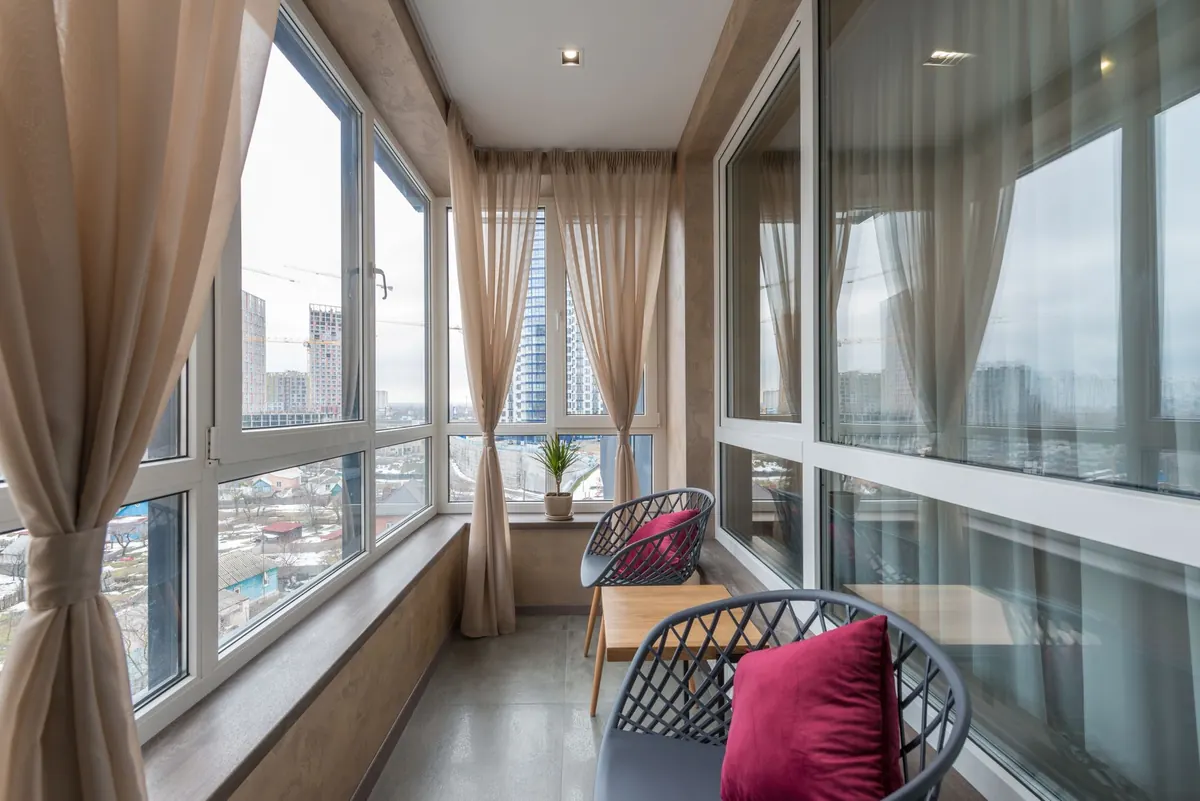
People buy one pair of curtains to solve both and end up with a bedroom that glows at midnight. Split the job. A sheer layer at the glass handles daytime privacy while keeping the room bright; a heavier outer pair handles evening and light. Cafe curtains — covering only the lower half of the window — are a neat answer for a street-facing kitchen or bathroom where you want light at eye level.
If you need real darkness, understand that blackout fabric only works if light can’t get around it. Light leaks from the top, the sides, and the gap where two panels meet. Mount the rod well above the frame and wider than the opening, choose a return or wrap-around style that pushes fabric back to the wall, and let the panels overlap in the centre. Blackout also does nothing for noise, which surprises many renters.
6. Hang Higher and Wider Than Feels Natural
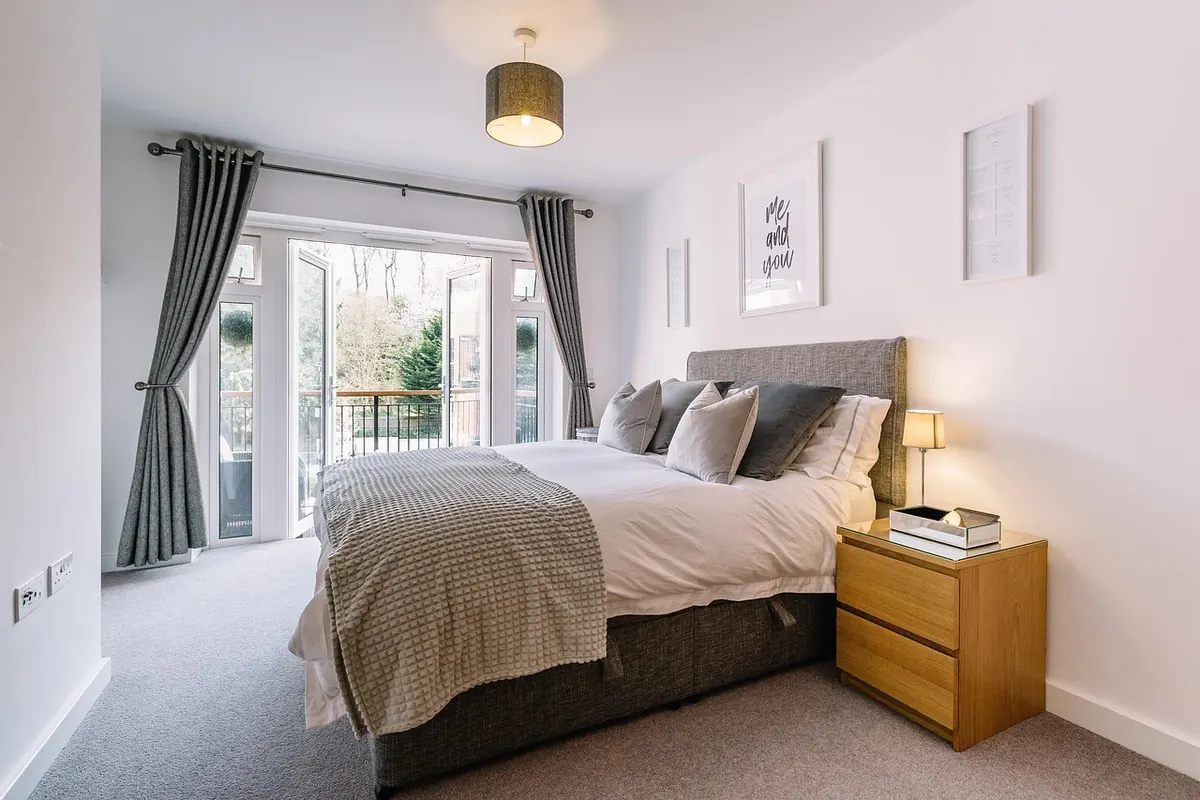
Most rental windows are hung too low and too narrow, which makes ceilings look lower and rooms smaller. Set the rod closer to the ceiling line than to the frame — a few centimetres below the ceiling is usually right — and extend it beyond each side of the window so the open curtains sit over the wall, not over the glass. That single adjustment lets in more daylight and makes the window feel twice its size.
For length, either stop a centimetre above the floor for a crisp, practical line, or let the fabric just kiss it. Avoid covering a radiator or heater with long fabric; it wastes heat and puts cloth near a heat source. Keep panels clear of hobs, candles and anything that gets hot.
7. Plan the Take-Down Before You Hang Anything
Photograph the window before you start, including the bare frame and any existing holes. Keep the packaging, spare hooks, screws and the instruction sheet in one labelled bag, and note which brackets came with which room. Choose washable fabrics so cleaning doesn’t become a removal project, and wash on a cool, gentle cycle with the hooks off. When you leave, you’ll want to reverse everything in an afternoon, not reconstruct it from memory.
A Ten-Minute Final Check Before You Buy
Run through these five questions at the shop or checkout page:
- Do I have the rod width and drop written down, measured at the mounting point?
- Does this rod suit my surface, and is the curtain weight inside its limit?
- Have I solved privacy and light control separately, or am I hoping one pair does both?
- Can I wash this fabric in the machine I actually have access to?
- Can I remove all of it without leaving a mark I can’t fix?
If every answer is yes, buy with confidence. Good rental curtains are the rare improvement you can enjoy for two years and undo in twenty minutes — which is exactly the kind of decorating a rented flat rewards.
Photo: Max Vakhtbovych / Pexels